


I’m writing this from seat 21L, and I have the entire row to myself. Generous in this economy. And when you’re a mom flying without her children, I would say this counts as an absolute luxury.
Hello! I’m back from my impromptu hiatus, emphasis on the impromptu, because I really hadn’t meant to take a break from writing here. If you were to look in my drafts, you’d see a number of articles written feverishly, with so much angst and excitement, only for them to become very long free writes of flowing thoughts or, mostly, a bunch of half-baked bulleted thoughts.
I lost the wind in my sails for a bit. I had plenty to say, maybe too much, but I’ve been feeling pulled to think more deeply about this creator life I’m building for myself, and what it actually means when your work, your audience, your taste, and your business all start to blur together.
Which brings me to today’s topic ↓
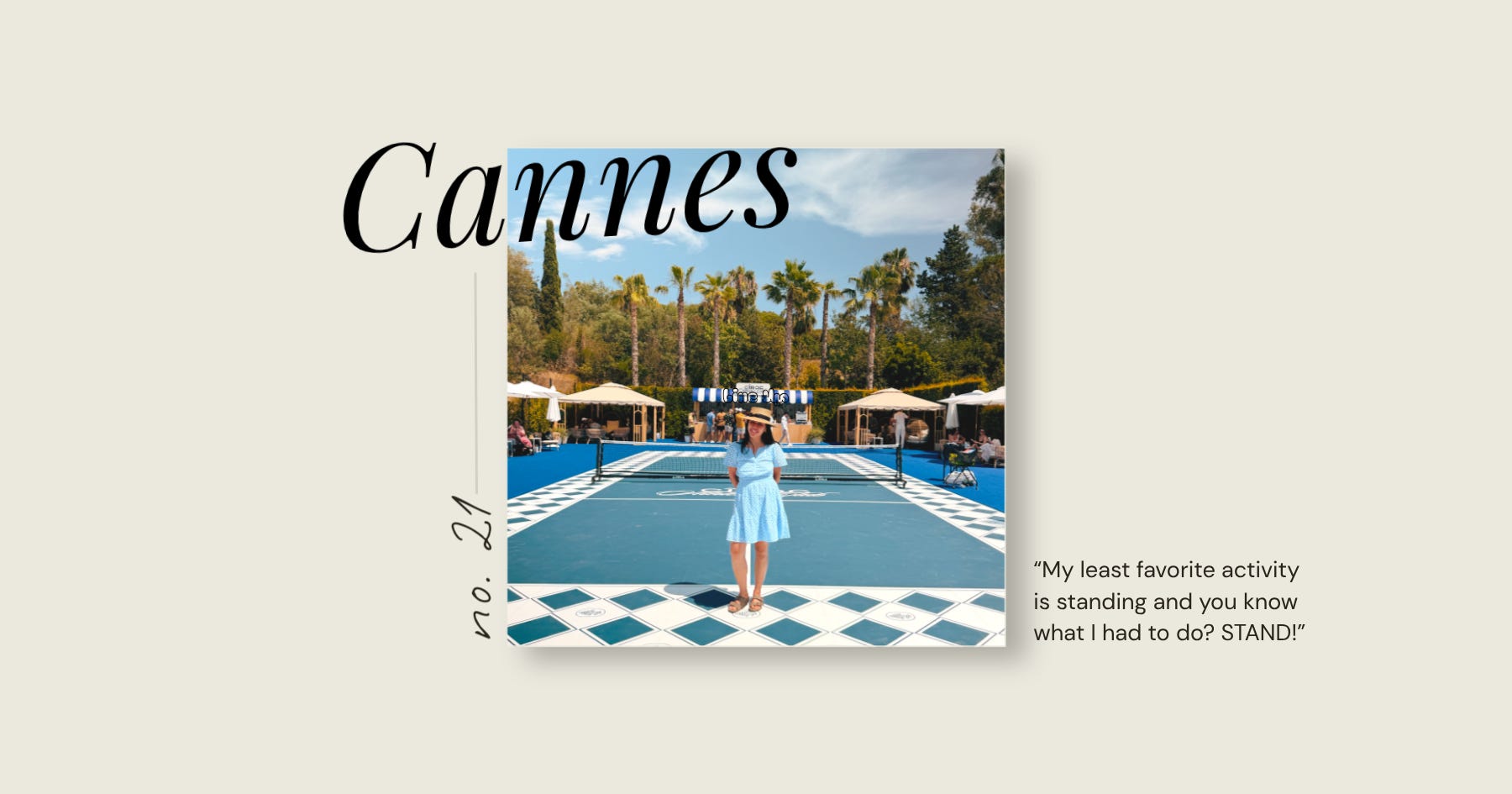
I’m coming back from my first experience at Cannes Lions and boy, do I have thoughts. Aside from the obvious, Cannes was not what I expected. It was loud and busy, and I found myself getting wound up in overlapping meetings and bookings. I know, I know, it is quite a first world problem to complain about which yacht party we should go to. But hear me out.
Cannes Lions has been described as the Coachella for marketers, and I can totally understand why. Historically, the festival has been more geared toward brands and agencies. This year, it felt like creators were brought much closer to the center of it all. And let me tell you, the flocks came flying in.
Almost everyone I talked to was there to create content, or talk about creating content, or just exist with the title of “creator.” The creator economy is a roughly $310 billion industry, and there’s no sight of it slowing down. What was most fascinating to me was that a lot of the creators I talked to, including myself, had somehow managed to gather up partnerships that significantly reduced the cost of attending, completely covered the entire thing, or covered the entire thing plus extra.
That made me think about how something that once felt wildly unachievable, attending a luxury conference like Cannes on your own dime, is becoming more possible because brands and individuals are starting to see creators as a cost-effective way to show up in these rooms.
In today’s newsletter, I’m going to share what I saw in the world of creator partnerships and how it ties to Cannes. I’ll talk about how creators got there, including my own strategy, what I saw on the ground, thoughts from people in the industry and creators themselves, and what I would personally do differently next year as someone who works as a head of marketing and is also a creator herself.
This article was brought to you by Modash, an influencer marketing platform for B2C brands that helps teams find the right creators, manage campaigns, and actually track what’s working.
For the marketers reading this, especially the ones being asked to “do something with creators,” the reason tools like Modash matter is because creator partnerships get messy very quickly once they move beyond one-off posts.
Who should you work with? Is their audience actually the right fit? Are they reaching the people you want to reach? What content went live? What performed? What should you do again? That’s the less glamorous side of all this Cannes content. Behind every recap, activation, and creator partnership is a brand trying to make the work feel less like a group chat with deliverables and more like an actual channel.
Modash helps with that operational layer, especially for B2C brands running influencer campaigns across Instagram, TikTok, and YouTube.
Subsidizing your Cannes trip
Cannes Lions is expensive.
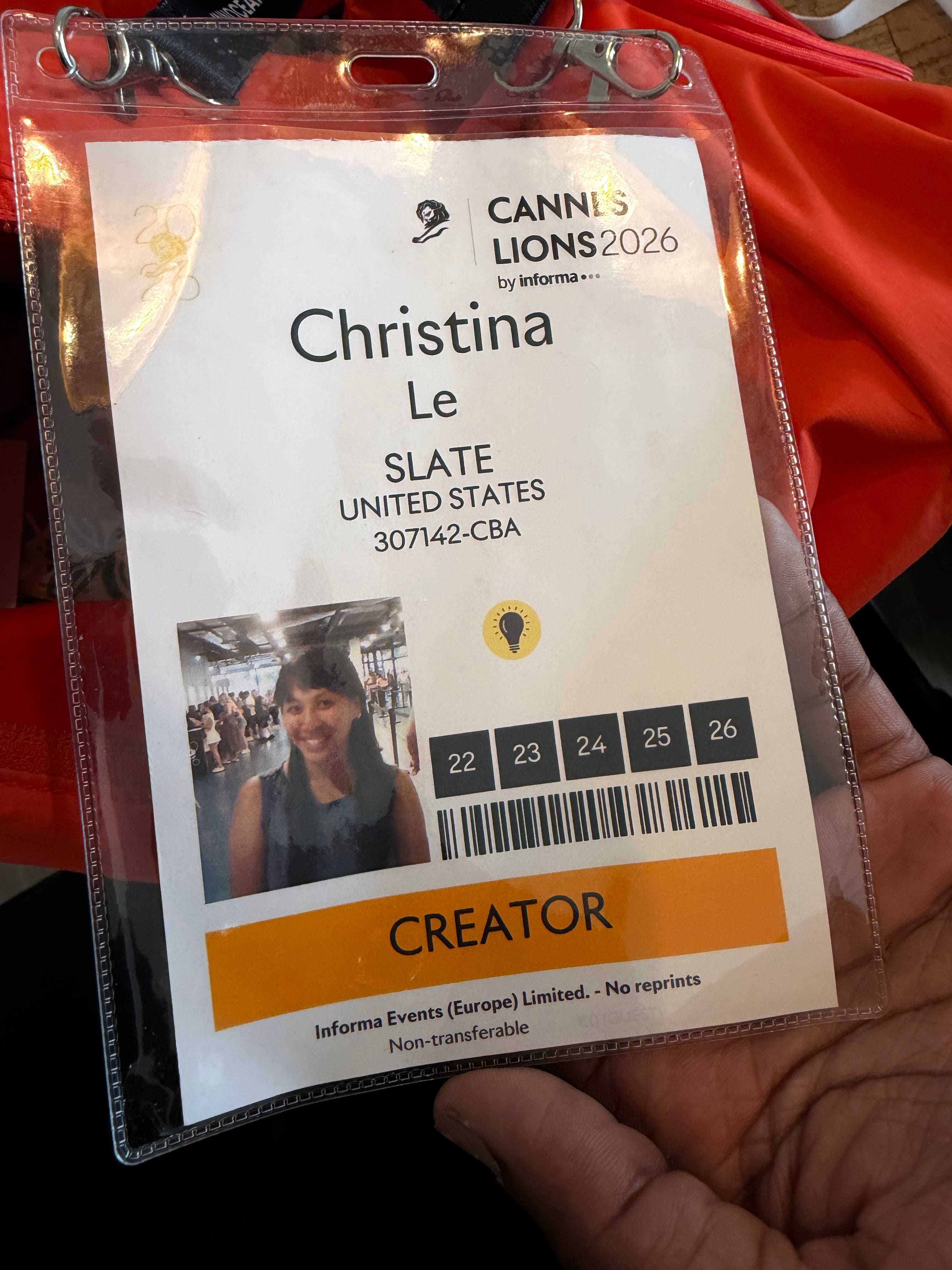
The cheapest tier is the student pass, and even that’s €1,035 plus sales tax at 20%. A classic marketer pass is €4,465. This year, they also had a creator pass for €1,245. All of which to say, it’s expensive. And that doesn’t include Uber charges, lodging, flights, or food.
You can easily spend upward of $5,000 to be there. So to call this an investment would be saying the least.
Which is why it makes sense that creators are getting savvier about how they subsidize the cost.
What was interesting this year, with the uptick in creators attending, was how many people leaned into the strategy of announcing that they were going to Cannes and were open to partnering. Which means they were essentially eating the upfront cost of attending while not being entirely sure if they would get sponsored.
But I’ve seen a number of people do this, and it has worked for them.
The strategy is pretty straightforward: announce that you’re going, then wait for a brand to reach out, or reach out yourself and let people know you’ll be at Cannes.
Jayde Powell, founder of The Em Dash Co., told me:
“I went in with the mindset that I’d likely pay for this entire trip myself. I paid for my travel, I paid for my lodging. When I announced that I was going to Cannes, me and my PR team took a proactive approach to reach out to brands, both current partners and potential partners, with custom pitches but also simply asking, ‘Hey! Are you guys activating at Cannes?’ And I was able to get four partnerships through that.”
I had a similar methodology as Jayde. I let people know that I was going to Cannes, and I made a couple of announcement posts, which led me to having two partners.
I also had a number of brands tell me no, but much like the saying “the squeaky wheel gets the grease,” I was yapping my butt off trying to get people to sponsor.
I also limited myself to only partnering with two brands that were noncompeting. That was the maximum I was willing to activate with while at Cannes. I didn’t want my entire feed to be bought out with ads, so I had to create a limit.
That actually gave me more leverage when talking to brands because it made the package feel more exclusive, and it gave me a way to extend the partnership beyond Cannes.
I think the pressure to work with a lot of brands might sound glamorous in theory, but in reality, that is a lot of work to put on yourself while attending the festival. The last thing you want to do is get tangled up in deliverables while you’re also trying to be present, meet people, go to events, and pretend your feet aren’t slowly filing a formal complaint.
What kind of partnership content was happening?
You’re probably wondering what kind of partnerships were actually being formed with these creators.
Based on what I saw on people’s feeds, the content fell into a few buckets:
Recaps and takeaways.
Lots and lots of recaps. This included GRWM videos, Day 1 and Day 2 breakdowns, “what I learned” posts, and the general “here’s what it’s like to be here” content.On-the-ground capturing.
This is when a creator goes to a specific brand activation, captures content, and sends it over to the brand team to use on their own channels.
Ambassador-style partnerships.
This is where the creator is basically brought in as a person on the ground for the brand, being an extension of the brand team. You’re going to their activation, getting people to attend or sign up, capturing content for them, demoing and talking to people, and representing the brand in a way that feels a little more human than the brand just posting about itself.Skits and filmed content.
There were creators making more produced content, whether that was scripted skits, social-first videos, or content that felt more intentionally built around the brand’s message.Blogs and newsletters.
There were also written recaps, newsletter placements, and blog content, which I think is worth paying attention to because not everything needs to be a short-form video to be valuable.Dinner and activation attendance.
In some cases, the partnership was simply tied to showing up. Attend the dinner. Be in the room. Capture a few moments. Help give the activation more visibility.
It’s really not that different from traditional influencer marketing. It’s creators creating content based on the outcome the brand had in mind. In a lot of cases, that outcome was awareness, but more specifically, it was about being associated with the right people, in the right rooms, during a week when everyone was already paying attention.
What people in the industry think happens next
One thing I wanted to understand was whether this Cannes creator moment felt like a one-time rush bubble that’s gonna burst, or if it was pointing to something bigger about where the creator economy is headed.
So I asked a few people who live much closer to this space than I do. Their answers were all slightly different, but they kept circling the same idea which is that creator partnerships are growing up.
Scarlett Chorley, Tech Partnerships at Kyra, told me:
“What I know from influencer marketing that’s different now than before is that it’s all about your tech stack and your infrastructure. This is not about running campaigns anymore. This is about your ability to scale. And the ability to understand, read, and optimize your data so you can make the best decisions and scale it. Influencer marketing is operationally the more laborious channel in the world but with the right infrastructure, you can get where you need to get and achieve what you need to do.”
That infrastructure point came up a lot. The creator economy may still look casual from the outside, but behind the scenes, the brands taking it seriously are building actual systems around it.
Jaclyn Johnson, CEO of Create & Cultivate, saw it through the lens of ownership:
“We’re entering the ownership era of the creator economy. The smartest creators aren’t just monetizing their audience, they’re building wealth by investing in, advising, and owning pieces of the companies they help grow.”
That part feels especially important because it pushes the creator conversation beyond brand deals. There’s a difference between getting paid for a post and building long-term value from the companies you help make relevant.
Lia Haberman, author of ICYMI by Lia Haberman, had a slightly more cautious take:
“I think the playbook has been played. The more creators that come here thinking that they can just pick up, come over and get brand deals, this space is going to get saturated. And I think that it’s gonna be twice as hard to get brand deals because there’s just gonna be so many other creators coming. Having seen what happened this year, everybody got their bag, everyone is doing sponsored content, and they’re just gonna assume that you can just fly to France and automatically get sponsors. I don’t think that can sustain itself. Maybe next year it’ll happen. But I’ll say that two to three years from now, it’s going to be virtually impossible and it’ll be a really small select group of creators that have gobbled up all of the partnerships and sponsorships.”
I think that’s a looming thought over a lot of people’s head after the spike. This year, there was still a bit of novelty around creators showing up at Cannes in this way. But novelty has a shelf life, and once everyone sees the playbook, the bar gets higher.
Jayde Powell, founder of The Em Dash Co., brought it back to the creator side:
“Creators are gonna have to get really creative with how they’re pitching and offering brand partners a premium offering in terms of what they would get in return. For example, let’s say there’s a brand partner that you want to work with. The add-on of working with you as a creator is maybe that they’ll get your content posted while you’re at Cannes instead of after. Or maybe you’ll offer to get an interview with the CEO of a brand, rather than just a random person on the street. There has to be something premium that you’re willing to offer to the brands.”
And that feels like the real takeaway for creators. Just being there won’t be enough forever. The better pitch is going to come down to what kind of access, speed, content, context, or perspective you can offer that makes the partnership feel worth it.
What I’d do differently next year
Again, this was my first year at Cannes, and I learned a lot.
In particular, I came as a creator this year. I went in not having much of a plan, other than making sure I was shaking hands and rubbing elbows with people. I knew I was going to be a complete sponge the entire week, and that’s exactly what happened.
So, knowing what I know now, what would I do differently?
As a brand:
I wouldn’t book an activation just to say I had one.
You’re competing with big, busting budgets. I’m talking hundreds of thousands, if not millions, of dollars, only for people to whisper amongst themselves about what party is actually worth going to. If you’re going to activate, there has to be a real reason for it beyond wanting your logo somewhere on a beach.I wouldn’t activate 10 creators at once.
I’d choose three creators who are the most aligned with the brand and pay a premium for exclusivity. Have them be the people rallying the room, attending your event, capturing the best content, and helping turn the activation into something people actually see beyond the people who were physically there. That’s the part I’d think about more deeply: how do you operationalize both the production and awareness piece so the activation doesn’t just live and die in the room?I would pay close attention to what other brands are doing.
I did a lot of walking around and looking at what people had going on. There were things like on-site tattooing, mailing postcard stations, dj sets, creator lounges, and all kinds of little experiences that made people stop. There are endless ideas, and I couldn’t help but wonder why some of these things aren’t already available at other conferences.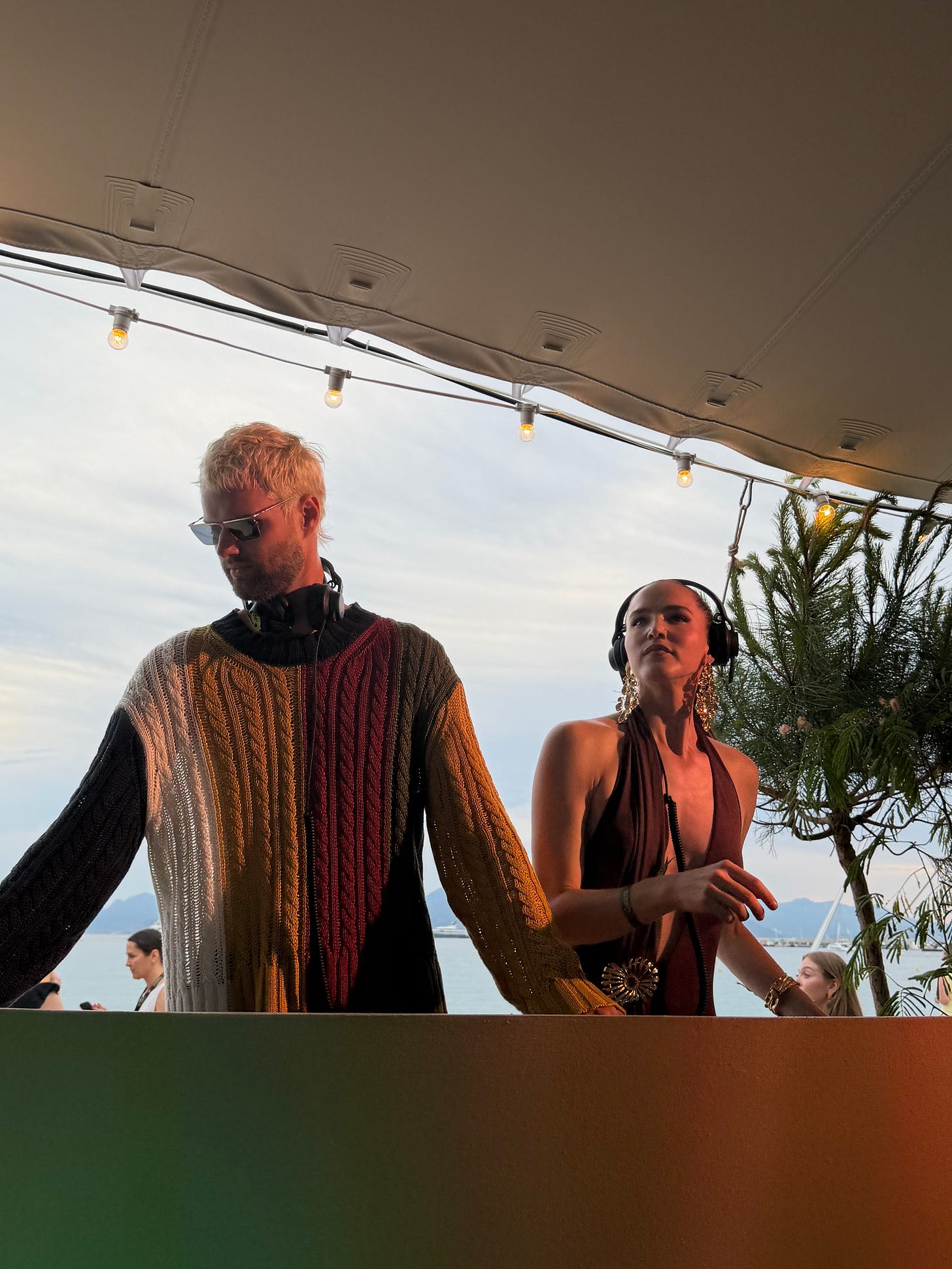
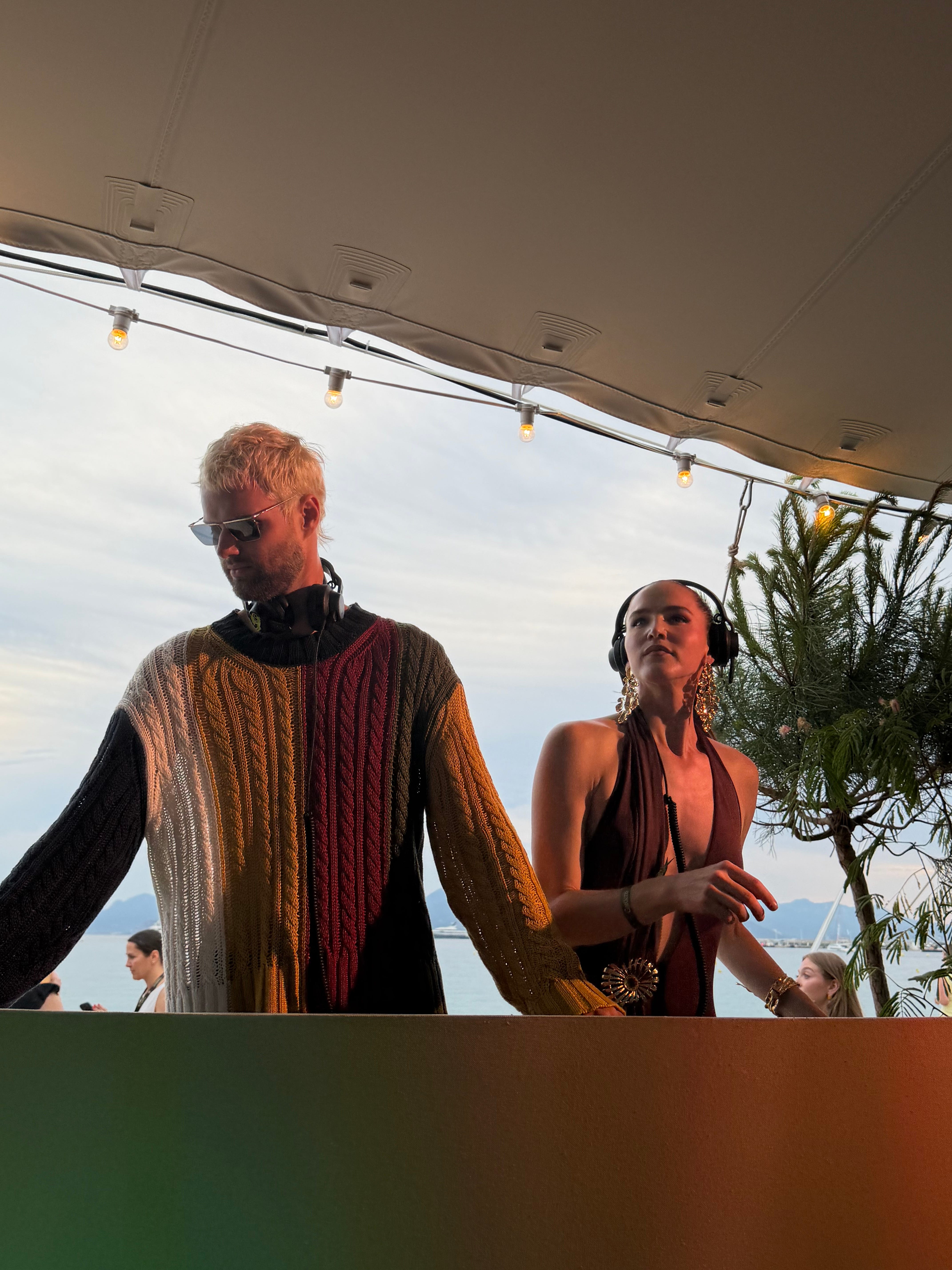
Sofi Tukker @ the Microsoft Garden’s party I would bring people from the team who are actually good at schmoozing.
And I mean that in the best way. Cannes is one of those places where someone knows someone who knows somebody who can get you on the list. You need people who can talk to strangers, make friends quickly, and not make the whole thing feel painfully transactional.I wouldn’t do an activation on Wednesday.
Literally every brand did something on Wednesday. Tuesday felt like the sweet spot.
As a creator:
Don’t partner with more than two brands.
I heard of people partnering with four or even five brands, and I think it can get very easy to overextend yourself. You don’t want to be the person who overpromises and underdelivers. Cannes is very busy, and unless you want to be trapped in your hotel room with weak Wi-Fi trying to upload content while everyone else is outside pretending they’re not tired, don’t overextend yourself.Bring snacks everywhere you go.
Every event promises elevated bites, and somehow you still end up hungry. I don’t know who needs to hear this, but tiny food on tiny plates is not a meal.Pick two things to do a day and leave the rest of your schedule open.
There’s a lot happening, and it’s easy to overbook yourself. I think the better move is to choose the few things that matter most and leave room for some spontaneity.Have a list of people and brands you want to meet.
Find out where their activations are and make a loose plan around that. I didn’t do this, and I found that I wasted a lot of time just hanging out with the homies. Which, to be clear, was lovely. The homies are great. But if I go again next year, I’d be a little more intentional about who I wanted to meet, where I wanted to be, and what I wanted to walk away with.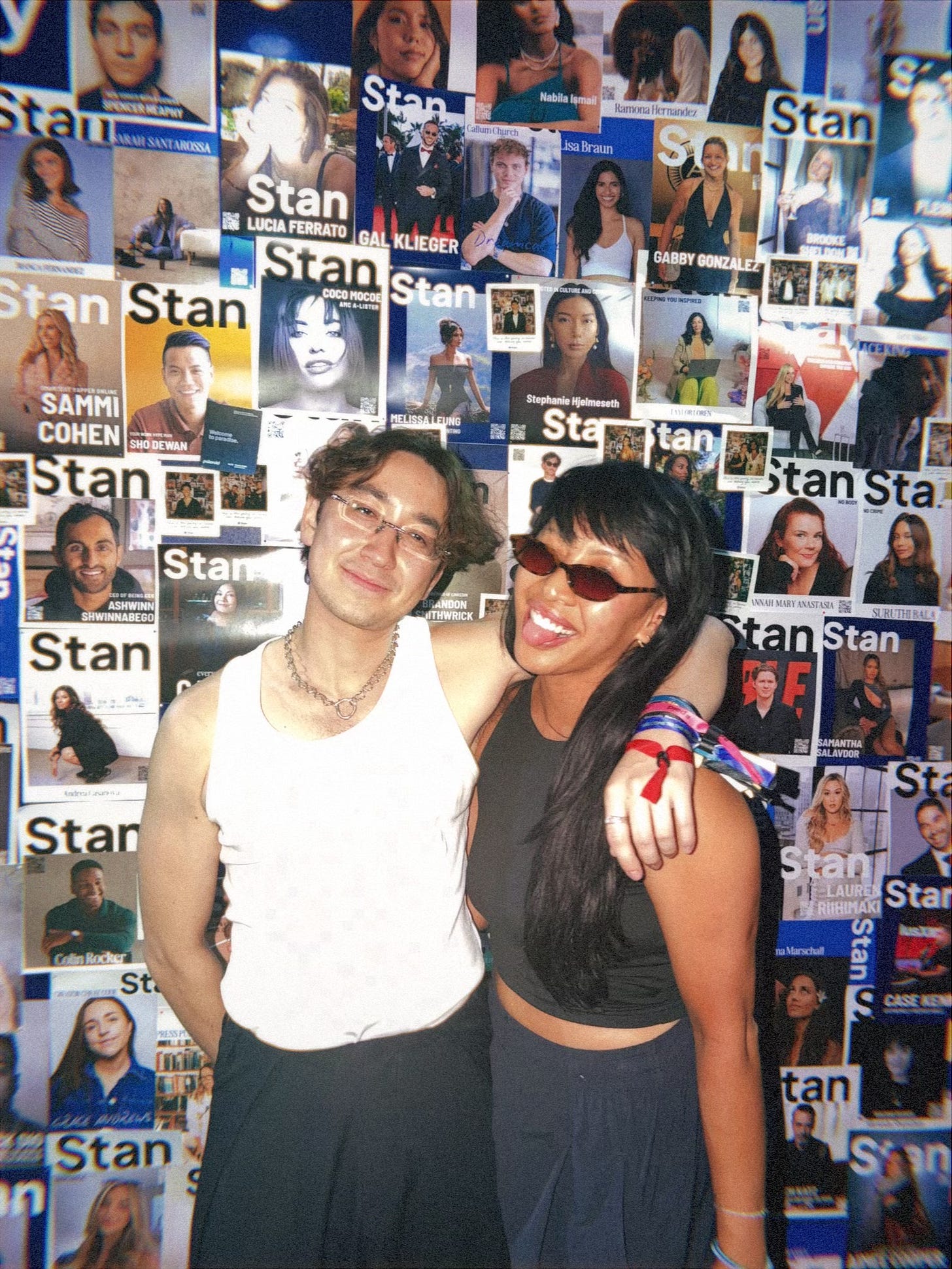
Me and Eugene Healey @ the Signal Party
And that officially wraps up my Cannes takeaway and lessons learned. My flight will be landing here soon and it’s back to reality. I survived the heat, the crowds, the overlapping events, and the general chaos of being surrounded by thousands of marketers in linen. And I’m so glad I did it. I’m glad I took the bet on myself and winged it a little.
There is a real hunger for brands and creators to work together, but there is also a lot of figuring out that still needs to happen. How brands should activate creators. How creators should package themselves. How both sides can make the work feel valuable without turning every moment into a deliverable.
And I can’t thank my partners at Modash enough for believing in this mission to help make sense of where creator partnerships are going, especially from the perspective of someone who sits on both sides of it.
Until next time, Cannes. I will be bringing better shoes and more snacks. Xxx
Another banger, as always
Christina! This was such a fun read, and so illuminating to me, someone who isn’t part of the creator world at all. I didn’t even know Cannes Lions was a thing, let alone that it happened recently, until I saw some Substackers posting about it. I’m glad you went and had a great time, and that you shared your experience here!